QED
QED


 English
 QED
English
QED
English
 All Blogs
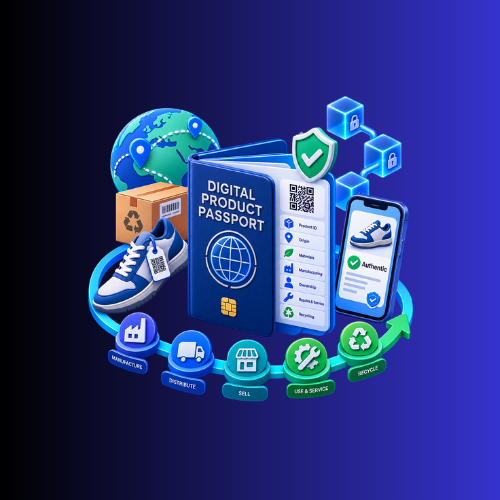
Digital Product Passport for Product Authentication and Lifecycle Tracking
Products today move through multiple stages, from manufacturing and distribution to customer ownership, resale, servicing, and replacement. Throughout this journey, businesses need reliable ways to identify products, verify authenticity, track ownership, and provide useful product information. A Digital Product Passport creates a digital identity for an individual product and connects important information with that identity.
When combined with blockchain technology, a Digital Product Passport can provide a secure foundation for product authentication, ownership tracking, product history, and lifecycle visibility. It can also create a direct digital connection between brands, products, and customers.
A Digital Product Passport is a digital record associated with a specific physical product. It provides information that can help identify, authenticate, and understand the history of an individual item.
Instead of keeping product information only on packaging, labels, paper documents, or separate databases, businesses can create a digital record that remains connected to the product.
A Digital Product Passport can contain information such as
The exact information available through the passport depends on the product, business requirements, and access permissions.
Traditional product identification methods can make it difficult to maintain complete product information throughout the lifecycle of an item.
A Digital Product Passport provides a central digital identity that can remain connected to an individual product.
For example, a product may be manufactured by a brand, sold through a retailer, purchased by a customer, and later resold to another person. The physical item changes hands, but its digital identity can continue to provide relevant information.
This can help businesses improve
Blockchain can provide the underlying infrastructure for creating trustworthy digital identities for physical products.
A product can be represented through a unique token identity on a blockchain network. The token can remain associated with the product while relevant ownership and lifecycle events are recorded.
QED Vault uses private blockchain infrastructure and assigns each product a unique token identity as part of its Digital Product Passport approach. The platform allows authorized parties to mint tokens while supporting serialized and non-serialized products.
This creates a digital connection between the physical product and its blockchain-based identity.
A Digital Product Passport system can involve several important steps.
Issue a Digital Passport
The first step is to create a digital passport for the product. QED Vault's process assigns each product
a unique token identity at this stage.
Set Custom Rules
Businesses can define rules based on their product and business model. These rules can include
warranties, resale logic, or exclusivity requirements.
Track the Product Journey
As the product moves between owners, its token can transfer with the item. This provides a way to
maintain visibility into ownership changes.
Verify the Product
Customers and authorized users can verify the product through a QR scan or passport lookup.
Improved Customer Retention
Understanding customer preferences and addressing issues quickly encourages repeat business and
long-term relationships.
This process connects product identification, authentication, ownership, and lifecycle information within one digital ecosystem.
Counterfeit products can create serious problems for businesses and customers. Fake products can damage brand reputation, reduce customer trust, and affect legitimate sales.
A Digital Product Passport can provide an additional method for verifying whether an individual product has a valid digital identity.
Each genuine product can be assigned a unique token identity. Customers can then access the associated passport and check the available product information.
QED Vault positions its Digital Product Passport as a tool for proof of authenticity and allows users to verify products through QR scanning or passport lookup.
This makes product authentication easier while creating a digital record connected to the physical item.
A QR code can make a Digital Product Passport simple for customers to access.
The customer can scan the QR code associated with a product and reach its digital passport. This provides an easy way to access product verification without requiring users to understand the technical details of blockchain.
QED Vault specifically provides QR-based product authentication as part of its verification process.
This can be useful for products sold in physical stores, online marketplaces, secondary markets, and other environments where customers want to check authenticity.
Ownership tracking is an important part of the product lifecycle.
When a product is sold or transferred, its digital identity can be associated with the new owner. With blockchain-based token tracking, ownership changes can be recorded as token movements.
QED Vault's process allows the token to transfer with the physical item to new owners.
This can create a clearer ownership history for products that are frequently resold.
For high-value products, this information can be particularly useful because buyers may want to understand the product's history before completing a purchase.
Luxury goods are one of the areas where product authentication and provenance can have significant value.
A Digital Product Passport can give every luxury item its own digital identity and provide customers with access to relevant product information.
For luxury brands, this can support
QED Vault specifically highlights luxury goods and focuses on providing proof of authenticity and product ownership tracking.
The digital passport can continue to be useful even after the initial sale as the product moves through different owners.
Automotive manufacturers and suppliers manage large numbers of parts and components. Product identification and traceability can be important throughout the supply chain and after products reach customers.
A Digital Product Passport can provide an individual digital identity for a component or product.
This can support
QED Vault identifies automotive applications for verifying part authenticity and improving recall efficiency through full traceability.
Aerospace products and components can require detailed lifecycle records. Information about an individual component may need to remain accessible throughout manufacturing, distribution, maintenance, and other stages.
A Digital Product Passport can connect a physical component with a digital record containing relevant lifecycle information.
Blockchain-backed records can provide a structured way to maintain information associated with individual products.
QED Vault highlights aerospace applications for compliance and safety through tamper-resistant lifecycle records designed to support stringent regulatory requirements.
Food and beverage brands increasingly need to provide information about sourcing, quality, and provenance.
A Digital Product Passport can connect a product with digital information about its journey and relevant product details.
Customers can potentially access information related to
QED Vault identifies food and beverage as an application area where transparent sourcing, quality proof, and verifiable provenance can help build consumer trust.
Testing and certification organizations generate records that may need to be verified by businesses, customers, or other authorized parties.
A Digital Product Passport can connect certification information with the identity of an individual product.
This can help create a more accessible digital record around certification and testing.
QED Vault highlights third-party laboratories as an application area where blockchain-backed records can extend the value of certification services beyond the initial testing process.
A product's lifecycle does not end when it is sold.
An individual item may pass through several stages
Manufacturing → Distribution → Retail → Customer Ownership → Resale → New Ownership → Service
A Digital Product Passport can remain associated with the product during these stages.
This gives brands an opportunity to understand how products move through the market and how customers interact with them.
QED Vault states that token movements generate real-time data that can help monitor ownership changes, warranty claims, and service records.
A product's lifecycle does not end when it is sold.
An individual item may pass through several stages
Manufacturing → Distribution → Retail → Customer Ownership → Resale → New Ownership → Service
A Digital Product Passport can remain associated with the product during these stages.
This gives brands an opportunity to understand how products move through the market and how customers interact with them.
QED Vault states that token movements generate real-time data that can help monitor ownership changes, warranty claims, and service records.
The secondary market has made product provenance increasingly important.
When customers purchase used or pre-owned products, they may want to know whether the item is genuine and understand its history.
A Digital Product Passport can provide access to relevant product information and ownership records.
For brands, this can help maintain a digital connection with products even after the initial sale.
For buyers, it can provide additional information when evaluating a product in the resale market.
Brand protection is not limited to preventing counterfeit products. It also involves building customer confidence and maintaining product authenticity throughout the market.
A Digital Product Passport can give each genuine product a unique digital identity.
This creates another layer of product verification that can complement physical product markings and other authentication methods.
QED Vault's system is designed to provide proof of authenticity without requiring physical changes to the product.
This can make digital authentication easier to introduce across different product categories.
A properly designed Digital Product Passport can provide several benefits.
Product Authentication
Customers and authorized users can verify the digital identity associated with a product.
Ownership Tracking
Digital identities can remain connected to products as ownership changes.
Better Traceability
Businesses can gain greater visibility into product journeys and lifecycle events.
Customer Engagement
Digital passports can create a direct connection between products and customers.
Brand Protection
Unique digital identities can provide an additional layer of protection against counterfeit products.
Product Lifecycle Visibility
Businesses can monitor relevant information throughout different stages of the product lifecycle.
Data-Driven Business Insights
Product activity can generate useful information about ownership changes, customer behavior, markets,
warranties, and services.
QED Vault highlights real-time product data, buyer preferences, emerging markets, operational insights,
and lifecycle information as areas where token movement data can support business decisions.
Not every business requires an open blockchain network for product authentication.
A private blockchain can provide businesses with greater control over who can participate in the system and who can mint tokens.
QED Vault uses a private blockchain model where authorized parties can mint tokens. It also highlights cost-free ownership changes and support for both serialized and non-serialized items.
This approach can be suitable for businesses that want blockchain-backed product identities while maintaining control over their ecosystem.
One challenge businesses may face when introducing new authentication technology is changing the physical design of an existing product.
A Digital Product Passport system can avoid the need for major physical changes when suitable verification methods are used.
QED Vault highlights product authentication without altering the physical product.
This can make adoption more practical for brands that already have established manufacturing and packaging processes.
QED Vault provides a Digital Product Passport solution focused on product authentication, ownership tracking, customer engagement, and product lifecycle visibility.
Its process includes issuing a digital passport, assigning each product a unique token identity, establishing custom rules, tracking the product journey, and enabling verification through QR scanning or passport lookup.
The platform is designed for industries including automotive, luxury goods, aerospace, third-party laboratories, and food and beverage.
By connecting physical products with digital identities, businesses can create a more traceable product ecosystem while giving customers a simple way to access product verification and information.
Start with a free trial and redefine trust with the digital product passport