QED
QED


 English
 QED
English
QED
English
 All Blogs
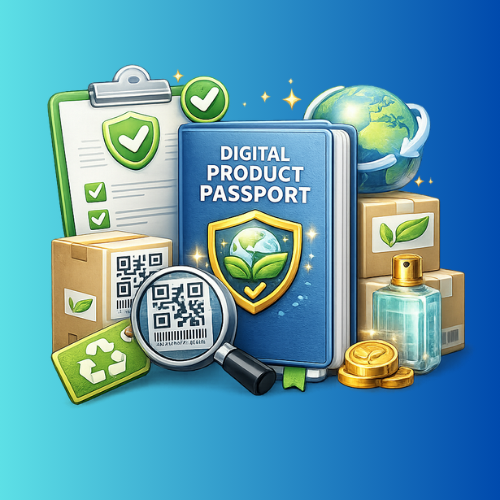
A Digital Product Passport for Product Transparency and Sustainable Supply Chains
As businesses embrace digital transformation and sustainability, the need for greater product transparency has become increasingly important. Consumers today want to know where products come from, how they are manufactured, and whether they are genuine. At the same time, governments and regulatory bodies are introducing stricter requirements for product traceability and environmental responsibility. To meet these expectations, businesses are adopting A Digital Product Passport (DPP) —a smart solution that stores and shares comprehensive product information throughout its lifecycle.
A Digital Product Passport is a digital record that contains detailed information about a product, including its origin, manufacturing process, materials, certifications, repair history, recycling information, and authenticity. Each product is assigned a unique digital identity, usually linked through a QR code, NFC tag, RFID chip, or secure serial number. By scanning the product with a smartphone or dedicated application, manufacturers, retailers, regulators, and consumers can instantly access accurate and verified product information. This improves transparency, strengthens brand trust, supports sustainability initiatives, and helps businesses comply with evolving global regulations.
A Digital Product Passport is created during the manufacturing process when each product receives a unique digital identity. This identity is securely connected to a cloud-based platform that stores all relevant product data. Information such as raw material sources, production date, quality certifications, warranty details, ownership records, maintenance history, and recycling instructions can be updated throughout the product's lifecycle.
When customers or supply chain partners scan the QR code or NFC tag, the platform instantly retrieves the product's digital record and verifies its authenticity. This helps customers confirm that they are purchasing a genuine product while giving businesses valuable insights into product movement and customer engagement.
One of the biggest advantages of implementing a Digital Product Passport is improved product traceability. Businesses can monitor products from raw material sourcing to manufacturing, distribution, retail, customer ownership, repair, and recycling. This complete lifecycle visibility helps reduce counterfeiting, improve inventory management, simplify warranty claims, and support circular economy initiatives.
A Digital Product Passport also strengthens customer confidence by providing transparent product information. Consumers can access details about product sustainability, certifications, country of origin, ingredients or materials, repair options, and environmental impact before making a purchase. This level of transparency enhances brand credibility and encourages informed buying decisions.
Digital Product Passports are becoming increasingly important across industries that require product traceability, compliance, and sustainability. Manufacturing companies use Digital Product Passports to track products throughout the supply chain while ensuring authenticity and quality assurance. Automotive manufacturers use DPPs to store vehicle component information, maintenance history, battery details, and recycling records.
The fashion and luxury goods industry uses Digital Product Passports to verify product authenticity, provide ownership history, and demonstrate sustainable sourcing practices. Electronics manufacturers include repair manuals, warranty information, software updates, and recycling instructions within the product passport, extending product life and supporting responsible disposal.
Pharmaceutical companies use Digital Product Passports to improve medicine traceability, verify product authenticity, and comply with healthcare regulations. Food and beverage businesses provide transparency regarding product origin, ingredients, manufacturing processes, and certifications, helping consumers make safer purchasing decisions. Furniture, consumer goods, industrial equipment, cosmetics, and construction material manufacturers are also adopting Digital Product Passports to improve supply chain visibility and meet evolving regulatory standards.
As global regulations and consumer expectations continue to evolve, implementing A Digital Product Passport is becoming a strategic advantage for forward-thinking businesses. Beyond improving product transparency, Digital Product Passports help organizations strengthen brand protection, support sustainability goals, reduce counterfeit risks, and improve customer engagement. Businesses gain complete visibility into their products while providing customers with trusted information throughout the product lifecycle.
Modern Digital Product Passport platforms integrate seamlessly with ERP systems, CRM software, warehouse management systems, manufacturing platforms, IoT devices, and cloud infrastructure. Features such as blockchain security, AI-powered analytics, QR code authentication, API integration, real-time reporting, and lifecycle management make these platforms highly scalable and future-ready.
By investing in a Digital Product Passport solution, businesses can improve regulatory compliance, enhance supply chain transparency, simplify product recalls, support circular economy initiatives, and build stronger customer relationships. As sustainability and digital traceability become global priorities, organizations that adopt Digital Product Passport technology today will be better positioned for long-term growth, improved operational efficiency, and greater consumer trust.
Start with a free trial and redefine trust with the digital product passport